Ruby Stone (Manik Gemstone): The Complete Beginner’s Guide to Meaning, Benefits, and Buying Tips
Introduction
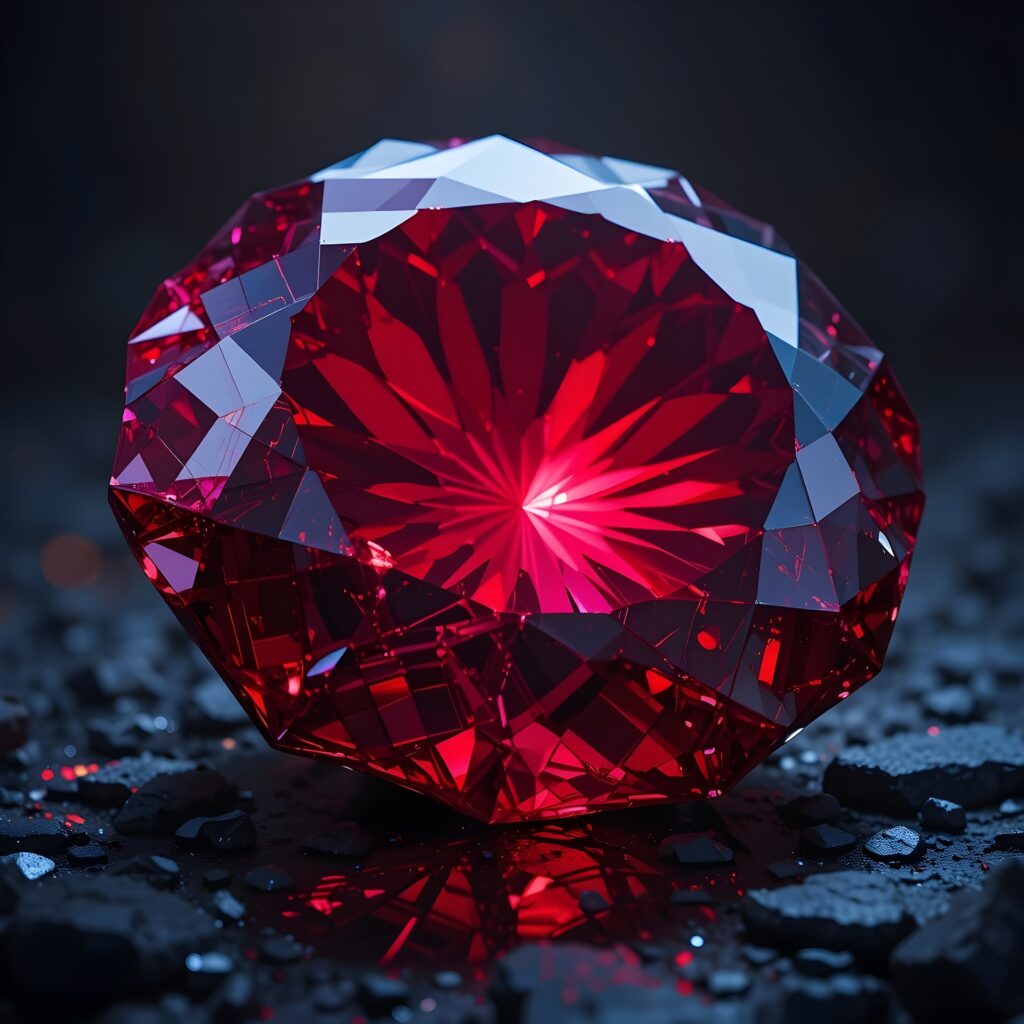
If you’ve ever seen a deep red gemstone glowing like a drop of wine caught in candlelight, chances are it was a ruby. Known in Sanskrit as Manik and often called the “King of Gemstones,” ruby has fascinated kings, traders, and jewelers for thousands of years.
But if you’re new to the world of gemstones, ruby shopping can feel overwhelming. What makes one ruby cost a few thousand rupees and another cost as much as a house? Is that “ruby” you saw online even real? And does wearing a ruby actually do anything, or is that just folklore?
This guide answers all of that — in plain, simple language. We’ll walk through what ruby stone actually is, where it comes from, what it means astrologically and symbolically, how to tell a natural ruby from a synthetic one, and how to buy one without getting fooled. Whether you’re buying your first Manik stone for astrological reasons or simply love the stone’s beauty, this article is written to give you a clear, honest starting point.
Quick note on honesty: Some sections below discuss healing properties and astrological benefits associated with ruby. These come from centuries-old traditions — Ayurveda, Vedic astrology, and folklore — and are not scientifically proven claims. We’ll flag those clearly so you can make an informed decision.
What is Ruby Stone?
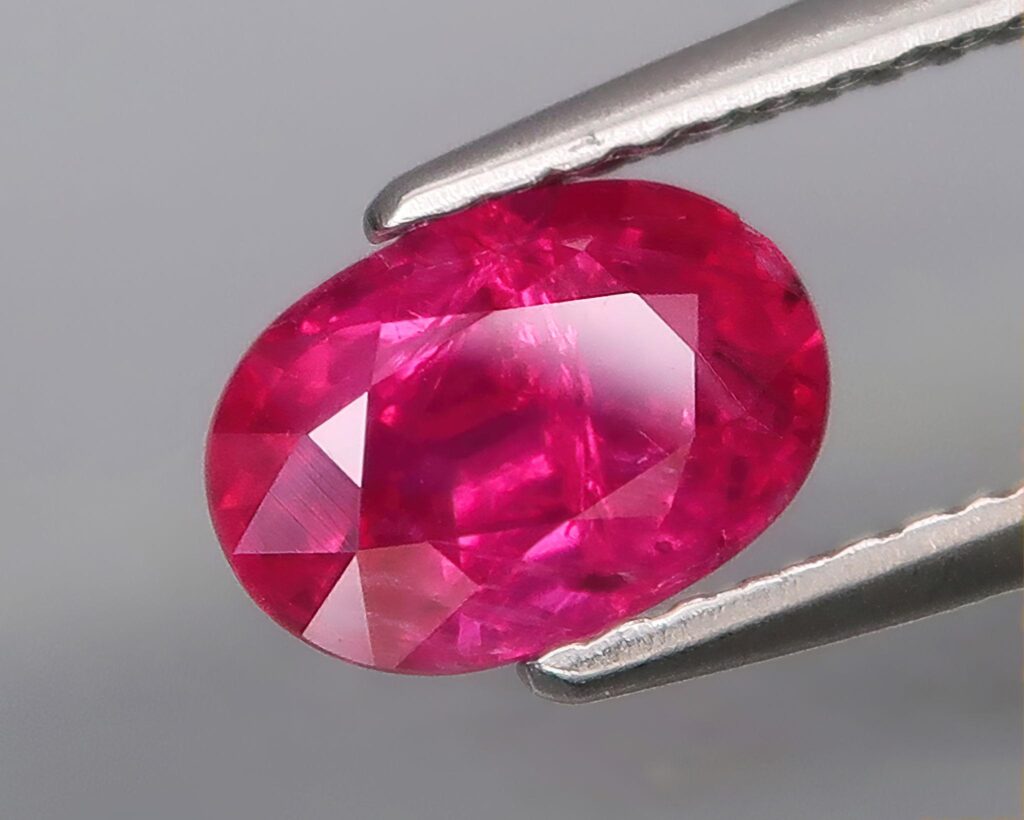
Ruby stone is a precious gemstone belonging to the corundum mineral family — the same family that produces sapphires. What separates ruby from other corundum gems is a trace element called chromium, which gives ruby its signature red color. In fact, the word “ruby” comes from the Latin word ruber, meaning red.
In Vedic astrology and Indian gem trade, ruby is known as Manik or Manikya, and it’s associated with the Sun (Surya) — the center of our solar system and, symbolically, the center of vitality, leadership, and confidence.
Ruby is one of the four traditional “precious gemstones,” alongside diamond, emerald, and sapphire. It’s valued for three main reasons:
Its rarity, especially in larger, high-clarity sizes
Its exceptional hardness, making it durable for daily wear
Its deep, symbolic association with passion, power, and protection
Because natural, high-quality rubies are genuinely rare, the market is unfortunately full of treated, synthetic, and misrepresented stones. That’s exactly why later sections of this guide focus heavily on identification and buying safely.
History and Origin
Ruby’s story stretches back over 2,000 years. Ancient Sanskrit texts referred to ruby as “Ratnaraj,” meaning “King of Precious Stones,” reflecting the immense value placed on it in South Asian culture long before modern gemology existed.
In ancient Burma (modern-day Myanmar), warriors reportedly embedded rubies into their skin, believing the stone made them invincible in battle. Burmese rubies — particularly those from the Mogok Valley — are still considered among the finest in the world today.
In medieval Europe, rubies were worn by royalty and believed to bring good health and protection from harm. The stone appears in historical texts, royal jewelry collections, and religious ornamentation across cultures — from Hindu temple idols to Byzantine crowns.
Modern gemology, backed by organizations like the Gemological Institute of America (GIA), has since moved the conversation from folklore to science — studying ruby’s crystal structure, origin tracing, and treatment detection. Yet the cultural reverence for ruby has never faded, especially in South Asian astrology, where Manik remains one of the most sought-after gemstones even today.
Physical and Chemical Properties
Understanding ruby stone properties helps you appreciate why it’s valued — and why it’s tough enough to wear every day.
Key Ruby Stone Properties:
Mineral group: Corundum (Aluminum Oxide – Al₂O₃)
Coloring element: Chromium (creates the red color; more chromium = more fluorescence and vivid red)
Hardness: 9 on the Mohs scale (second only to diamond, which is 10)
Fluorescence: Many natural rubies show red fluorescence under UV light, especially those from Myanmar
Quick Tip: Ruby’s hardness (9 on Mohs scale) makes it an excellent choice for rings and everyday jewelry, since it resists scratches far better than softer gemstones like emerald or opal.
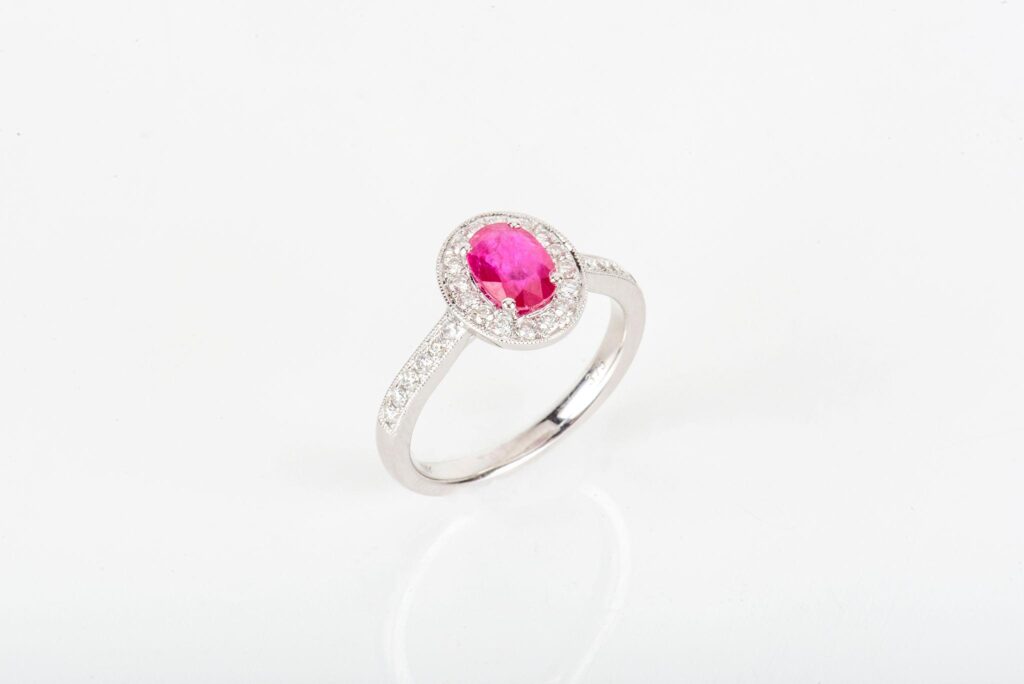
Because of its exceptional hardness and stable chemical structure, ruby is considered one of the most durable colored gemstones available, suitable for rings, pendants, and heirloom jewelry alike.
Ruby Stone Meaning and Symbolism
Across cultures, ruby stone meaning centers on a few consistent themes: passion, power, protection, and vitality.
In Vedic tradition: Ruby (Manik) represents the Sun — the soul, self-confidence, leadership, and life force.
In Western tradition: Ruby symbolizes love, courage, and passion, often exchanged as a gift symbolizing deep devotion.
In folklore: Ruby was historically believed to protect its wearer from danger and misfortune, and to bring good fortune in business and relationships.
Because red is universally associated with energy, blood, and vitality, it’s no surprise ruby became a symbol of life force in nearly every culture that encountered it.
Ruby Stone Benefits
People wear ruby stone for a mix of aesthetic, cultural, and traditional reasons. Here are the most commonly cited Ruby Stone Benefits:
Confidence and leadership: Traditionally linked to the Sun’s energy, believed to boost self-esteem and decision-making
Vitality and energy: Associated with physical stamina and enthusiasm in traditional belief systems
Relationship harmony: Often gifted as a symbol of passion and commitment
Career growth: In astrology, worn by those seeking authority, recognition, or leadership roles
Symbol of prosperity: Long associated with wealth and status in royal and merchant history
Aesthetic value: Simply put — it’s one of the most beautiful gemstones to wear, regardless of belief system
Callout: Whether or not you follow astrological traditions, ruby’s beauty, rarity, and durability make it a genuinely rewarding gemstone to own.
Healing Properties
Many traditional and alternative healing systems attribute certain properties to ruby stone. It’s important to be transparent here:
Disclaimer: The healing properties described below are based on traditional beliefs, Ayurveda, and crystal healing practices. They are not scientifically proven and should not replace medical advice or treatment.
Commonly cited traditional beliefs include:
Believed to support blood circulation and heart health (symbolically tied to its red color)
Associated with boosting energy levels and reducing lethargy
Thought to help balance emotional stability and reduce fear
Believed by some practitioners to support the base/root chakra in energy healing systems
If you’re dealing with any health concern, please consult a licensed medical professional rather than relying on gemstone therapy alone.
Astrological Significance
In Vedic astrology, ruby (Manik) is considered the gemstone of the Sun (Surya), one of the most influential celestial bodies in a birth chart.
Disclaimer: The following information is based on traditional Vedic astrology and is a matter of belief, not scientific fact.
According to traditional astrological practice:
Ruby is recommended for individuals with a weak or afflicted Sun in their birth chart
It’s believed to strengthen leadership qualities, confidence, and authority
Traditionally suggested for people in government service, leadership roles, or the medical field
Usually recommended to be worn on the ring finger of the right hand, on a Sunday morning, after certain rituals — according to Vedic tradition
Important: Before wearing ruby for astrological purposes, it’s strongly advised to consult a qualified astrologer, as wearing the wrong gemstone (or an unsuitable weight/quality) is traditionally believed to cause more harm than good.
Ruby Stone Birthstone
Ruby holds a special place as a birthstone in modern gemstone traditions:
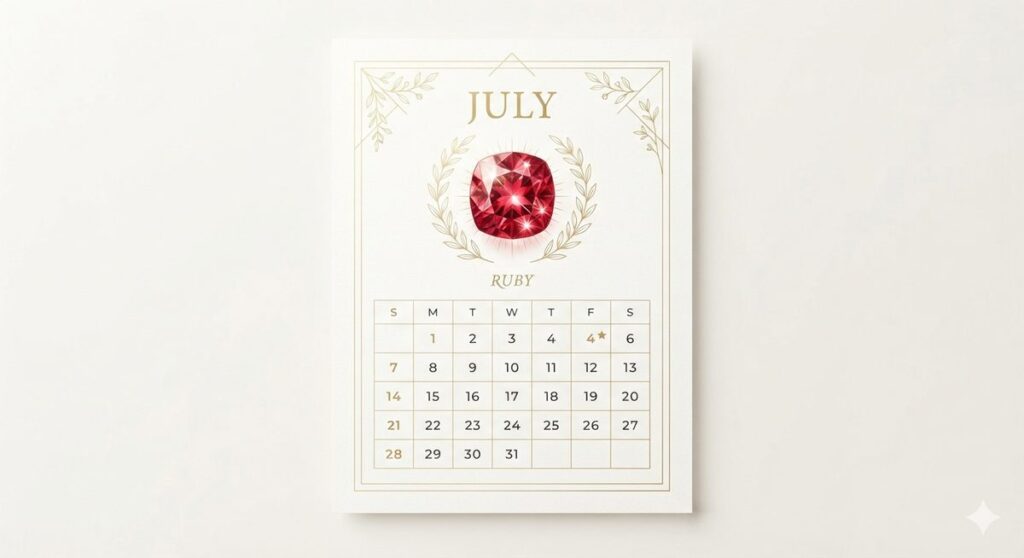
Modern birthstone for July, as recognized by the American Gem Trade Association and Jewelers of America
Also recognized as the traditional gemstone for the 15th and 40th wedding anniversaries
In Vedic astrology, it’s associated with those born under the Sun’s influence (Leo ascendant/moon sign, in particular)
If you’re born in July or celebrating a milestone anniversary, ruby stone birthstone jewelry makes for a meaningful and personal gift.
Famous Ruby Sources Around the World
Not all rubies are created equal — geography plays a huge role in quality and price.
Myanmar (Burma)
Home to the legendary Mogok Valley, producer of “pigeon’s blood” rubies — the most sought-after color grade in the world, known for intense red with a hint of blue fluorescence.
Mozambique
A relatively newer but major source (discovered early 2000s), now supplying a large share of the world’s gem-quality rubies, often with excellent color and clarity.
Thailand
Historically a major ruby source and still a global cutting and trading hub, though natural production has declined.
Sri Lanka
Known for producing lighter “pink-red” rubies alongside excellent sapphires.
Madagascar and Tanzania (Africa)
Growing sources of good-quality natural rubies, often more affordable than Burmese stones.
India
While not a major producer of gem-quality ruby, India remains the largest consumer and trading market for ruby (Manik) due to its astrological significance.
Types of Ruby Stones
“A certified natural ruby is not just a gemstone—it’s an investment in beauty, rarity, and history.”
When shopping, you’ll come across different classifications of ruby:
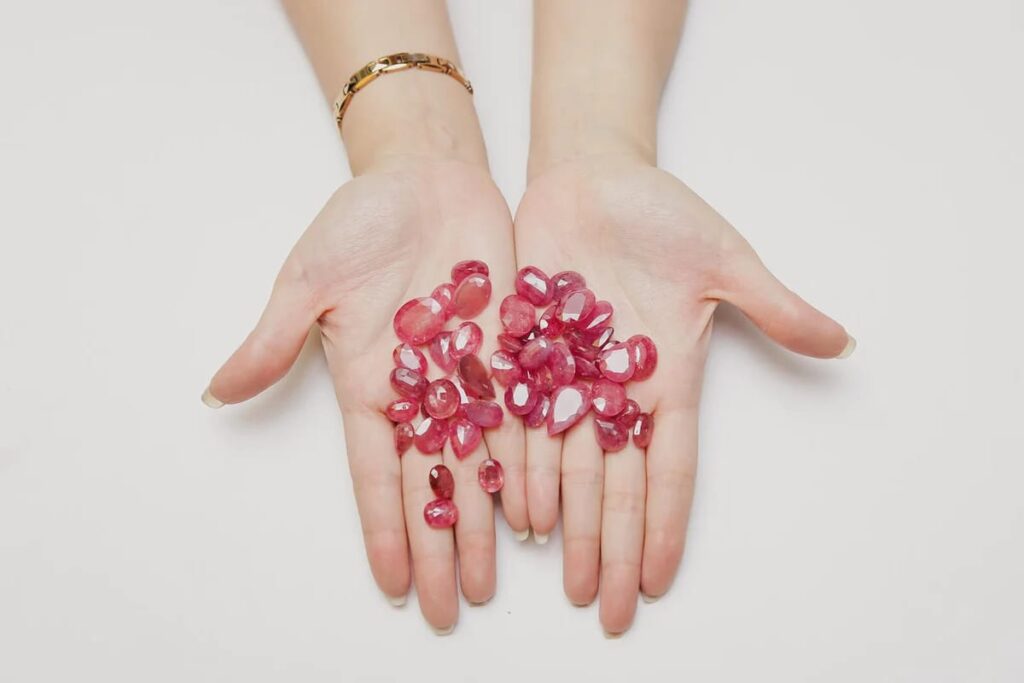
Natural (Untreated) Ruby: Mined and cut with no artificial enhancement — rarest and most valuable
Heat-Treated Ruby: Heated to improve color and clarity — an industry-accepted practice, still considered “natural”
Glass-Filled Ruby: Fractures filled with lead glass to improve clarity — significantly lowers value and durability
Synthetic (Lab-Created) Ruby: Chemically identical to natural ruby but grown in a lab — far cheaper
Star Ruby: Displays a six-rayed star effect (asterism) due to needle-like inclusions (rutile)
Composite Ruby: Made of multiple ruby fragments bonded together — lowest value category
Knowing these categories helps you ask the right questions before buying — always ask whether a ruby is natural, treated, or synthetic, and request lab certification.
Natural vs Synthetic Ruby
This is one of the most important sections for any beginner buyer, since synthetic and natural rubies can look nearly identical to the untrained eye.
Very few or no inclusions; may show curved growth lines
Price
Significantly higher, especially for untreated stones
Much lower cost
Rarity
Rare, especially in larger sizes
Not rare — can be mass-produced
Certification
Should come with a gemological lab report (GIA, GRS, AIGS)
May be sold without certification or falsely labeled
Astrological acceptance
Accepted for traditional astrological use
Generally NOT considered valid for astrological purposes
Investment value
Can appreciate over time
Little to no resale/investment value
Callout: If you’re buying ruby (Manik) for astrological purposes, only a certified natural, untreated ruby is traditionally considered effective. Synthetic rubies are not accepted in Vedic astrological practice.
How to Identify a Real Ruby
Here’s how experts and gemologists approach how to identify real ruby — and what you can check yourself before buying.
Simple checks you can do:
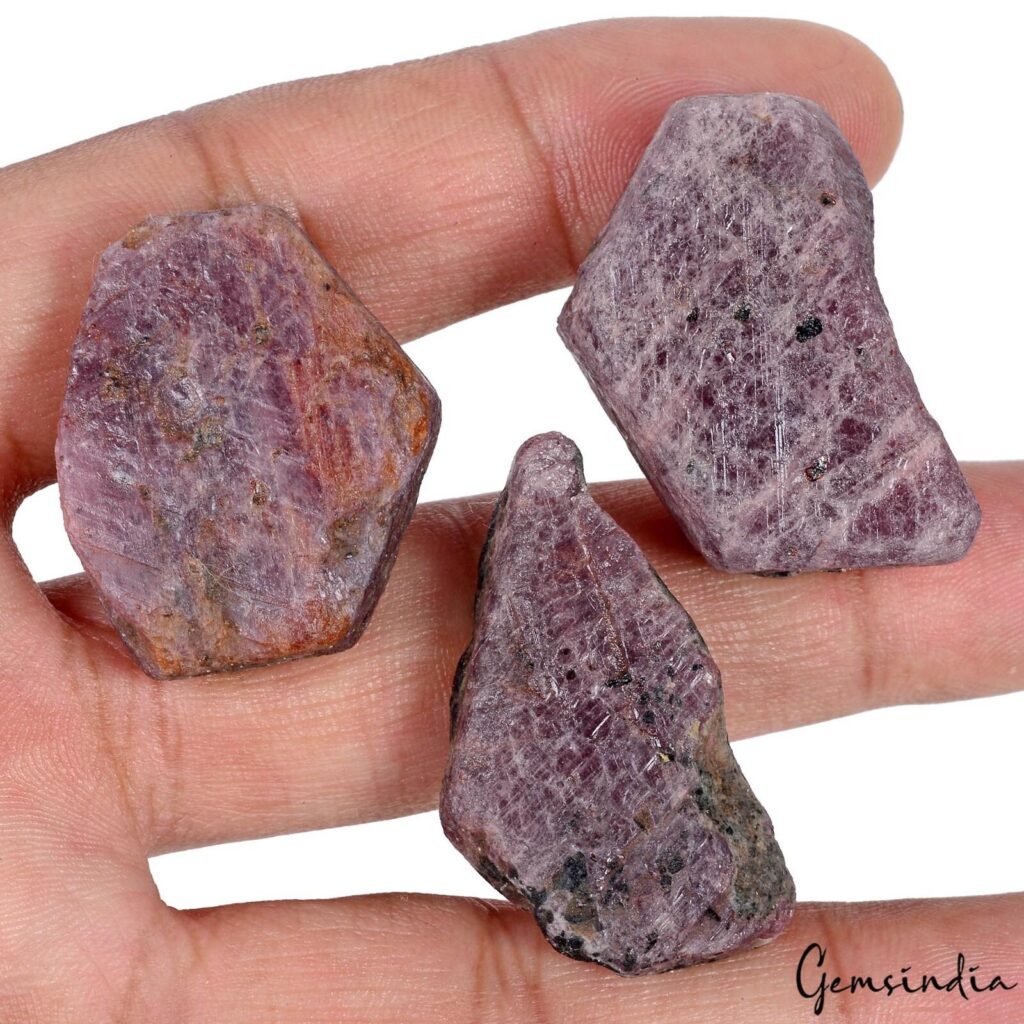
Look for natural inclusions: Real rubies almost always have tiny natural inclusions (like silk-like rutile needles or small crystals) visible under magnification. Flawless-looking rubies are a red flag.
Check the color under different light: Natural rubies often shift slightly in tone under different lighting (daylight vs indoor light), while glass or synthetic imitations may look artificially uniform.
Scratch test (with caution): Ruby is a 9 on the Mohs scale, so it should scratch glass easily. This isn’t foolproof since some synthetics share the same hardness.
Weight and feel: Ruby has a higher density than glass imitations, so genuine stones often feel heavier than expected for their size.
UV light test: Many natural rubies (especially Burmese) fluoresce red under UV light, though this varies by origin and isn’t a definitive test alone.
What only a professional lab can confirm:
Whether the stone is natural, synthetic, or glass-filled
Country of origin
Treatment history (heated, unheated, filled)
Important Tip: The only reliable way to confirm a ruby’s authenticity is through a certified gemological laboratory report from an internationally recognized institute such as GIA, GRS, AIGS, or a reputable local gem testing lab. Never rely solely on a seller’s verbal claim.
Ruby Stone Color Grades
Color is the single biggest factor in ruby’s value. Common trade terms include:
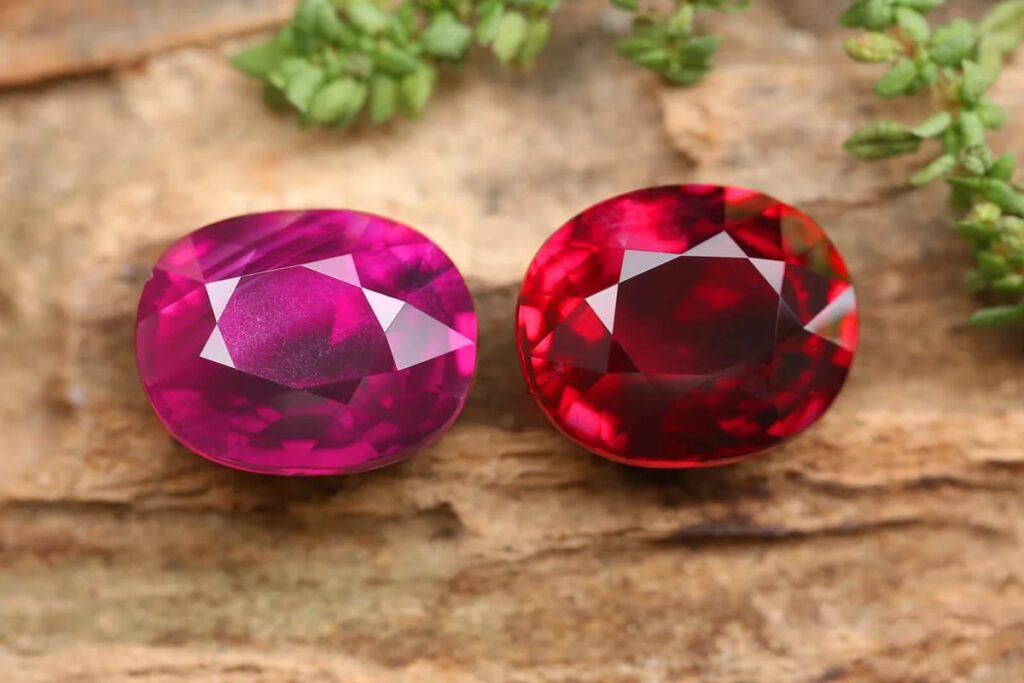
Pigeon’s Blood Red: The most prized shade — a vivid, slightly bluish-red, historically associated with Burmese rubies
Vivid Red: Pure, saturated red with excellent tone — very high value
Medium Red: Good red hue but slightly lighter or less saturated
Purplish/Pinkish Red: Common in Thai and Sri Lankan stones — attractive but generally lower in value than pure red
Brownish/Dark Red: Lower value due to reduced brightness and saturation
Generally, the more saturated and pure the red — without being too dark or too light — the more valuable the ruby.
Ruby Stone Quality (4Cs)
Just like diamonds, ruby quality is assessed using a version of the 4Cs:
Factor
What It Means
Impact on Value
Color
Hue, saturation, and tone of red
Most important factor; vivid pure red commands the highest price
Clarity
Presence/absence of inclusions visible to the eye
Fewer visible inclusions generally = higher value, though some inclusions are expected in natural stones
Cut
Shape and precision of faceting
Well-cut stones reflect light better and appear more vibrant
Carat Weight
Size/weight of the stone
Price increases exponentially with size, especially above 2–3 carats
Quick Tip: Unlike diamonds, a “flawless” ruby with zero inclusions under magnification should raise suspicion — it’s more likely synthetic or heavily treated.
Ruby Stone Price Guide
Ruby Stone Price varies enormously based on origin, treatment, and quality. Below is a general market guide (prices fluctuate based on market conditions, certification, and region):
Ruby Type/Quality
Approximate Price Range (per carat)
Synthetic/Lab-created ruby
$10 – $50
Glass-filled/heavily treated ruby
$20 – $100
Natural heated ruby (commercial grade)
$100 – $500
Natural heated ruby (fine grade)
$500 – $2,000
Natural unheated ruby (fine grade)
$2,000 – $10,000+
Natural unheated Burmese “Pigeon’s Blood” ruby
$10,000 – $100,000+
Disclaimer: These are general market approximations and can vary significantly based on certification, market demand, dealer, and region. Always get a quote from a certified gem dealer for an accurate valuation.
Factors that influence Ruby Stone Price:
Country of origin (Burmese rubies command the highest premiums)
Treatment status (unheated commands major premium over heated)
Certification from a recognized gem lab
Color saturation and clarity
Carat weight (price rises sharply above 2 carats)
Callout: Always ask for a certified lab report before paying a premium price for a “natural, unheated” ruby — this claim significantly affects price and should never be taken on trust alone.
How to Clean and Care for Ruby
Ruby’s hardness makes it relatively low-maintenance, but proper care keeps it looking brilliant for generations.
Cleaning tips:
Use warm water with a mild dish soap and a soft-bristled brush
Gently scrub behind the stone where dust collects
Rinse thoroughly and dry with a soft, lint-free cloth
Avoid ultrasonic cleaners if the ruby has been glass-filled or heavily treated, as vibrations can damage fractures
Storage tips:
Store separately from other jewelry to avoid scratching softer gems
Keep in a soft fabric pouch or a lined jewelry box compartment
Avoid extreme temperature changes, which can stress treated or filled stones
Quick Tip: Even though ruby is extremely hard, sharp knocks can still chip its edges — remove ruby rings before heavy manual work or workouts.
Common FAQs
1. What is Ruby Stone (Manik) used for? Ruby is used in fine jewelry, and in Vedic astrology, it’s worn to strengthen the Sun’s influence in a person’s birth chart, believed to boost confidence, leadership, and vitality.
2. Is Ruby Stone the same as Manik Stone? Yes. “Manik” or “Manikya” is the Sanskrit/Hindi name for ruby, commonly used in Indian astrology and gem trade.
3. How can I tell if my ruby is real or fake? Look for natural inclusions under magnification, and most importantly, get it verified by a certified gemological lab such as GIA or GRS.
4. Is a natural ruby always expensive? Not always — small, commercial-grade natural rubies with visible inclusions can be quite affordable. Price rises sharply with size, color quality, and lack of treatment.
5. What is the difference between heated and unheated ruby? Heat treatment is a widely accepted industry practice used to improve color and clarity. Unheated (natural, untreated) rubies are rarer and priced significantly higher.
6. Can I wear a synthetic ruby for astrological purposes? Traditional Vedic astrology generally does not consider synthetic rubies effective for astrological remedies — only natural, certified rubies are recommended.
7. What finger and day should Ruby be worn according to astrology? Traditional practice suggests wearing ruby on the ring finger of the right hand, on a Sunday morning, though this should be confirmed with a qualified astrologer.
8. What is “Pigeon’s Blood” ruby? It’s a trade term for the most prized ruby color — a vivid red with a hint of blue, historically linked to fine Burmese rubies.
9. Does ruby stone have real healing benefits? Healing claims associated with ruby are based on traditional and alternative beliefs, not scientific evidence. They should not replace professional medical care.
10. What is the birthstone month for ruby? Ruby is the official birthstone for July and is also associated with 15th and 40th wedding anniversaries.
11. How much does a good quality ruby cost per carat? Prices range from around $100 per carat for commercial-grade heated stones to well over $10,000 per carat for fine, unheated, or Burmese-origin rubies.
12. Can ruby stone be worn every day? Yes, thanks to its high hardness (9 on the Mohs scale), ruby is well-suited for daily wear in rings and other jewelry.
13. What’s the difference between ruby and sapphire? Both belong to the same corundum mineral family. Chromium creates ruby’s red color, while other trace elements (like iron and titanium) create sapphire’s blue and other colors.
14. How do I clean my ruby jewelry at home? Use warm water, mild soap, and a soft brush, then dry with a lint-free cloth. Avoid ultrasonic cleaners for treated or glass-filled stones.
15. Should I buy a ruby without certification? It’s strongly advised not to, especially for natural or high-value rubies. Certification from a recognized gem lab protects you from misrepresentation.
Conclusion
Ruby — or Manik — is far more than a pretty red stone. It’s a gem with thousands of years of cultural, astrological, and historical significance, prized for its rarity, hardness, and striking beauty. Whether you’re drawn to ruby for its traditional astrological meaning, its symbolic association with passion and vitality, or simply its stunning color, understanding its properties, quality factors, and pricing will help you make a confident, informed purchase.
The most important takeaway for any beginner buyer: always buy from a trusted source, and always ask for certification — especially if you’re purchasing a natural or high-value ruby. A little research goes a long way in the world of gemstones.
Call-to-Action
Thinking about adding a ruby (Manik) to your collection or exploring it for astrological purposes? Start by consulting a certified gemologist or a trusted astrologer before making your purchase, and always request lab certification for any natural ruby. If you found this guide helpful, share it with someone who’s exploring gemstones for the first time, and explore our other gemstone guides to continue learning.